- Macro Notes
- Posts
- AI Cranes and Grumpy Shoppers With a Dollar That Thinks It's Bulletproof
AI Cranes and Grumpy Shoppers With a Dollar That Thinks It's Bulletproof

Noah Zelvis
December 01, 2025
In partnership with

Consumers are in a mood, and not a good one. Confidence just slipped to the weakest level since April, even as stock portfolios look fine and the Fed hints at another rate cut.
At the same time, Washington is tinkering with food tariffs, AI data centers are turning construction into a gold rush, and the debt crowd is staring hard at the U.S. government.

Learn how to make every AI investment count.

Successful AI transformation starts with deeply understanding your organization’s most critical use cases. We recommend this practical guide from You.com that walks through a proven framework to identify, prioritize, and document high-value AI opportunities.
In this AI Use Case Discovery Guide, you’ll learn how to:
Map internal workflows and customer journeys to pinpoint where AI can drive measurable ROI
Ask the right questions when it comes to AI use cases
Align cross-functional teams and stakeholders for a unified, scalable approach
Stay Up to Speed on Macro News!
We now send our macro-focused news via text, so you’re never far from the latest market-moving action.
The Big Picture
Consumer Trends
The Online Cart Boom That Refuses To Slow Down

Cyber Monday spending is already running hot, with totals expected to exceed $14 billion.
Shoppers are firing off orders at a pace well above last year's as early-afternoon traffic spikes carry into the evening rush.
Retailers are responding with rolling discounts that reset every few hours, keeping consumers locked into the cycle of browsing, refreshing, and buying.
Deals Reshape How Households Spend
Most of the momentum is concentrated around electronics, home goods, and personal tech, where price cuts are the deepest.
Budget-conscious households are treating the event as a once-a-year window to stretch dollars that have been squeezed all year.
The pattern is clear across the board: consumers are leaning harder into value hunting and bundle deals to maximize savings while avoiding unnecessary add-ons.
What does This Signal Mean?
Strong consumer spending indicates that digital consumption is a key driver of the U.S. economy.
A lifted Cyber Monday helps smooth retail inventories, stabilizes shipping forecasts, and supports fourth-quarter momentum just as cost pressures continue to challenge households.
The U.S. ends the holiday weekend with a reminder that online demand remains a powerful buffer against economic uncertainty.
Pharma
The Pharma Truce That Could Reshape U.S. Health Spending

The U.S. and the UK are closing in on a zero-tariff agreement for pharmaceuticals, creating a rare moment where global trade directly affects American household budgets.
Removing import duties on medicines could lower costs across a wide range of prescription drugs, especially generics and high-volume treatments.
For U.S. buyers, this shift introduces a faster route for lower pricing at a time when household medical spending keeps climbing.
What It Means for Supply Chains and Access
Tariff-free imports would give distributors and hospital networks more flexibility in sourcing, which can reduce shortages and smooth price spikes.
By allowing UK drugmakers to ship into the U.S. at lower cost, the agreement broadens competition in a market where prices have stayed stubbornly high for years.
This opens the door for a larger mix of treatments on pharmacy shelves and potentially shorter wait times for critical medications.
A Shift With National Level Ripple Effects
Cheaper imports help relieve pressure on insurers, employers, and Medicare budgets, all of which have been strained by rising prescription prices.
Lower acquisition costs also support smaller clinics that operate on thin margins and often struggle to stock expensive therapies.
If finalized, the deal becomes one of the few trade moves in recent years that directly lowers costs for American families and strengthens long-term resilience in the nation’s healthcare system.
Act Fast (Sponsored)

NVIDIA's groundbreaking invention just handed the U.S. the key to winning the AI race against China.
It's about to trigger the FINAL wave of America's AI boom.
And tech legend Jeff Brown says, investors who own shares of "NVIDIA's Magnificent 7" before Jensen Huang's shocking reveal as early as Jan 6, 2026...
Could see gains of 200%, 300%, 750%, 1,200% and higher.
Click here to find out how before it's too late.
Manufacturing
Ninth Month of Red Flags for U.S. Factories
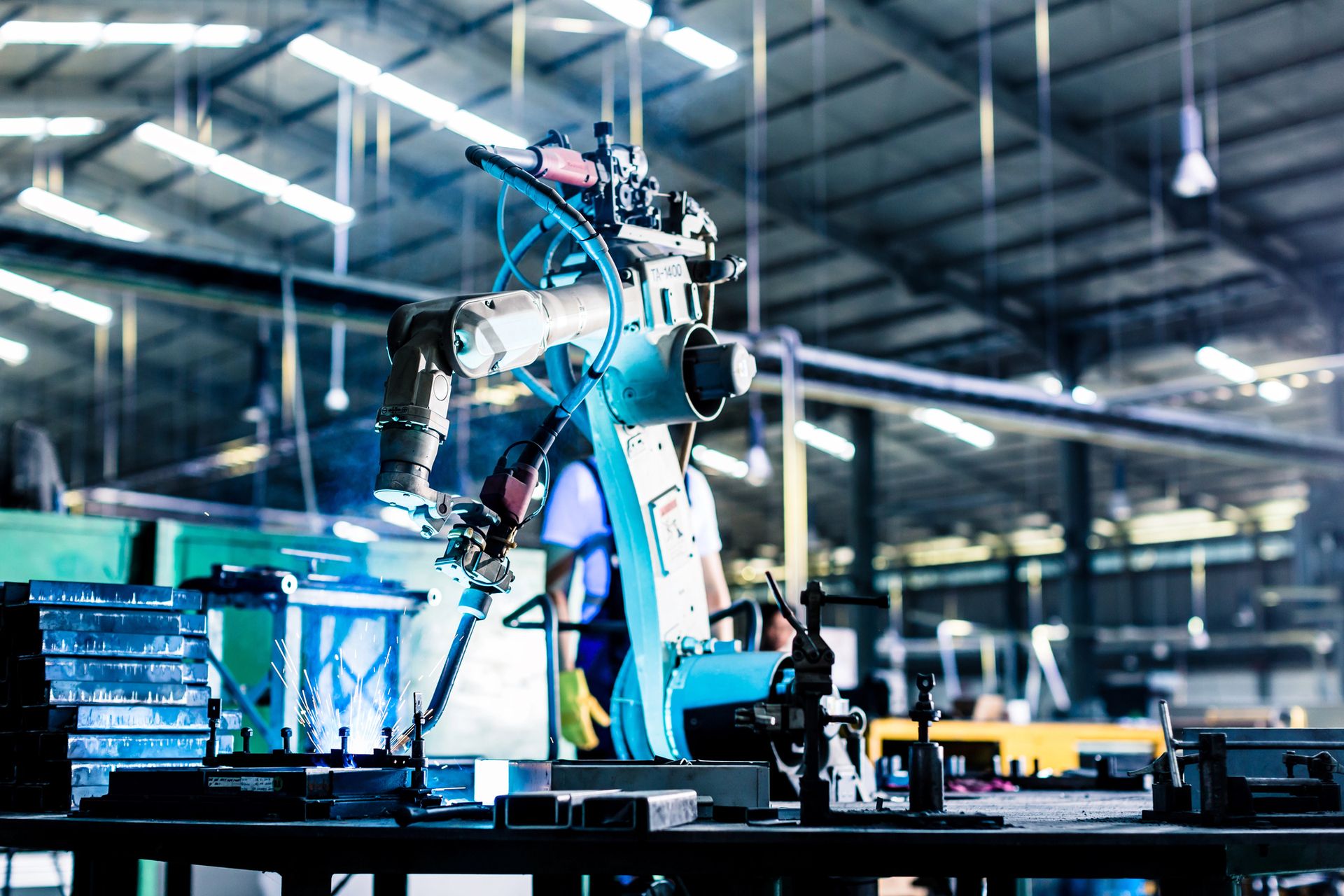
The U.S. manufacturing is slipping, marking the ninth straight month in contraction.
Order books remain thin, signaling that demand has not recovered enough to lift the sector back into expansion.
With factories facing slower throughput, the pace of production continues to drag on overall industrial activity.
Costs Climb While Orders Retreat
Producers reported higher prices for key inputs, adding pressure at the exact moment output is cooling.
Many firms are navigating rising material costs while juggling fewer incoming orders, a combination that tightens margins across everything from machinery to consumer goods.
With more than 400 companies providing data, the weakness reflects a broad slowdown rather than isolated trouble spots.
Ripple Effects for the U.S. Growth Outlook
A persistent contraction in manufacturing does not remain confined to plants.
Slower factory activity pulls down freight, metals, electronics, staffing, and regional employment tied to industrial hubs.
If order demand fails to stabilize soon, the sector may enter next year with scaled-back hiring plans and reduced capital spending.
Businesses that track these indicators see that the road to a full recovery may be long and bumpy.
Poll: What’s your preferred way to learn about investing? |
Metrics to Watch
Consumer mood vs markets:
Confidence has rolled over while expectations for jobs and income sag.
Watch how far headline surveys can drift lower before weaker spending shows up in retail and travel, especially if stocks stop doing the heavy lifting.Food prices after tariff tweaks:
Coffee and bananas got some relief, but plenty of pantry staples still wear tariff stickers.
Keep an eye on grocery inflation and promo intensity in staples and discount chains as the White House tries to claim it is fighting food costs.AI buildout pressure gauge:
Data center construction is soaking up welders, electricians, and managers at higher pay.
Track project delays, staffing shortages, and any signs that big tech is slowing capex, because that touches everything from local wages to credit markets.Debt jitters and the dollar:
The U.S. is running big deficits and leaning on the dollar’s reserve status to keep bond buyers calm.
Watch long Treasury yields, auction demand, and any chatter about diversifying away from Treasurys as an early warning that patience is wearing thin.Trade and growth pockets abroad:
South Korea’s exports are accelerating on chips and cars, while Canada’s GDP rebounded mostly on trade and government spend.
Monitor whether those bright spots can outlast tariffs and a softer global consumer, or if they fade back into the pack.
Market Movers
😬 Confidence: Vibes are Rolling Over
The Conference Board index just dropped to its lowest since April, with households more worried about finding work and keeping up with prices.
That usually means they keep spending on essentials but go slower on big-ticket items and upgrade splurges.
🥫 Food Tariffs: Relief at the Edges
Tariffs came off crowd-pleasers like coffee and bananas but stayed on plenty of other foods.
That helps the political optics more than the full grocery bill. Expect brands to talk about “input costs” a bit less, but no one should count on a huge checkout discount.
🏗️ AI Data Centers: Construction’s Hot Hand
AI campuses are minting six-figure jobs for skilled trades and stretching contractor backlogs close to a year.
Good news if you pour concrete or pull cable, but it also pushes up wages, materials costs, and the risk that overbuilding leaves lenders holding expensive empty shells later.
💸 Debt and the Dollar: How Long Can Markets Shrug
U.S. debt and deficits look worse than many peers, but the dollar still keeps global money flowing into Treasurys.
If investors start to question that safety blanket, higher yields would show up first, followed by louder debates about taxes, spending, and new “temporary” fees like tariffs.
🏠 Housing: Prices Cool, Pain Sticks
Home price growth has slowed to a crawl and inflation is outrunning house prices, yet affordability is still awful thanks to higher mortgage rates.
That combination usually caps turnover, keeps would-be movers stuck, and nudges more cash into renovations and rentals instead.
🇨🇦 Canada: Headline Pop, Soft Inside
Canada printed a surprisingly strong GDP number on the back of defense spending, better trade, and a housing pickup.
Under the hood, household demand is still fragile and unemployment is a drag, so the central bank is more likely to talk patience than victory.
Market Impacts
Equities: Futures are basically stretching on the couch after a wild November, with the major indexes flat to slightly lower overnight.
Under the hood, you have a market that just ripped higher last week after a mid-month AI scare and is now asking: did we overdo the fear or the relief rally.
Seasonally, December tends to be friendly, but this time the setup is more “earned grind higher” than automatic Santa rally.
This is a good spot to lean into quality names that actually print cash and have decent balance sheets, not the AI fanfic that swings 8 percent on one comment.
Bonds: Treasury yields are inching up again, helped along by the CME outage drama and steady odds of a December cut rather than anything new in the data.
The 10-year hanging around 4 percent says markets see slower growth coming but not full-on crisis.
For investors, the short and belly of the curve still work as your “sleep at night” income, with a smaller slice of long bonds as your insurance if growth or geopolitics go sideways.
Currencies: The dollar is on track for its worst week since July, which is what happens when markets decide a Fed cut is more likely than not.
The CME glitch barely registered in FX land; traders cared much more about soft data and dovish Fed chatter.
Yen is the wild card as people handicap a possible BOJ hike, while loonie bulls just got a boost from stronger-than-expected Canadian growth.
A softer dollar generally helps commodities and big multinationals, but it also means more two-way chop in FX as every central bank tries to talk its own story.
Commodities: Oil is stuck in neutral even with Russia-Ukraine peace talk headlines and an OPEC+ meeting on deck.
The bigger story is still too much expected supply and a market that does not want to overpay for barrels heading into a slower-growth 2026.
That backdrop favors refiners and select midstream more than pure price-taker drillers. Gold and silver, on the other hand, are acting like they heard the magic words “rate cut” and sprinted higher.
They still work as a small hedge, but at these levels you size them like hot sauce, not the main course.
Trade Alert (Sponsored)

He warned of past crashes before they hit.
Now, his powerful #1 trading indicator just flashed again.
This 30-year-old signal has quietly guided traders to some of the most profitable opportunities in recent memory — and it’s triggering right now.
It doesn’t require charts, math, or guesswork.
Just one glance, and you’ll see when to buy… and when to wait.
He’s revealing it today, along with a free guide that explains exactly how it works.
Don’t wait until this move is already halfway over — see the signal while it’s still fresh.
[Get the free indicator now]
Key Indicators to Watch
S&P Final U.S. Manufacturing PMI (Mon, 9:45 a.m. ET)
Quick vibe check on factory activity. A reading that holds in expansion territory says goods demand is slogging along, not collapsing.
A surprise slip would reinforce the slower-growth, more-cuts narrative and usually helps defensives and long bonds.ISM Manufacturing (Mon, 10:00 a.m. ET)
The more old-school factory survey that big asset managers still watch. If it stays stuck below 50, the story remains “factories are in a funk” even while services carry the load.
A pop higher supports cyclicals and chips; another soft print keeps pressure on the Fed to stay friendly.Fed Chair Powell Speaks (Mon, 8:00 p.m. ET)
This is the main event. Any hint that he is comfortable with a December cut or worried about the labor cooldown will lock in the market’s dovish view and could push yields and the dollar lower.
If he leans hawkish or vague, expect a little risk-off wobble.ADP Employment (Wed, 8:15 a.m. ET)
Not perfect, but it is the first look at November hiring from the private side. A steady, modest gain backs the “cooling, not cracking” labor narrative.
A big downside miss would juice rate-cut odds and usually helps growth stocks and long-duration bonds.ISM Services (Wed, 10:00 a.m. ET)
Services is where most people work and spend, so this one matters. A solid reading says the consumer engine is still turning over even if confidence surveys sound gloomy.
A downside surprise would fuel worries that the slowdown is finally spreading and could push investors toward staples, utilities, and more safety trades.
Everything Else
A softer read on core wholesale prices alongside steadier retail sales keeps the “slow but not stalling” U.S. economy narrative alive.
The BLS update on October jobs data reminds everyone that shutdown chaos and patchy stats make reading the labor market more art than science right now.
A private China factory survey showed manufacturing slipping back into contraction, keeping the global growth bears well-fed.
An ECB survey found euro-area households still expecting pretty tame inflation, which gives policymakers more room to sit on their hands.
In housing, pending home sales finally perked up in October as slightly cheaper mortgages coaxed some buyers off the sidelines.
That’s it for today’s edition—thanks for reading! Reply to this email with any feedback or let me know which macro trends or markets you’d like me to cover next.
Best Regards,
—Noah Zelvis
Macro Notes