- Macro Notes
- Posts
- Bad Vibes, Busy Factories, and Houses That Still Move
Bad Vibes, Busy Factories, and Houses That Still Move
Sentiment breaks records, factories rush orders, claims stay calm, and housing is picky, not dead.
In partnership with

This week has a funny split personality.
Consumers say the economy feels awful, factories are suddenly busier because everyone is trying to get ahead of shortages, and housing is still sluggish overall even though the right homes are moving fast.
Add in stable jobless claims and you get a market that still looks intact on paper, but a whole lot more nervous underneath.

Crash Expert: “This Looks Like 1929” → 71,048 Diversifying Here
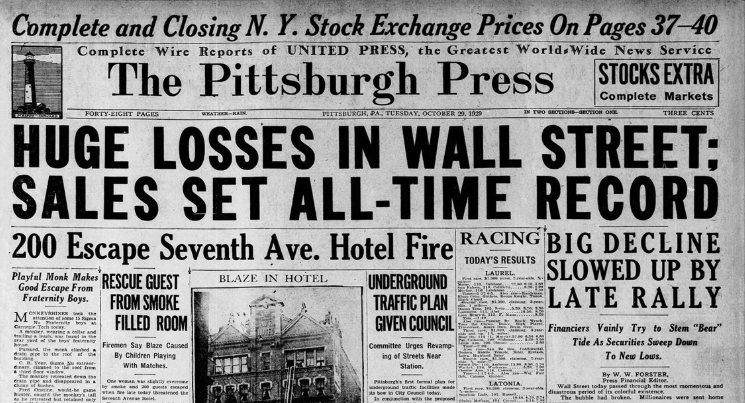
Mark Spitznagel, who made $1B in a single day during the 2015 flash crash, warned markets are mimicking 1929. Seems extreme but we did just see the worst quarter for the S&P since 2022.
So it’s not so surprising that Vanguard and Goldman Sachs forecasted 5% and 3% annual S&P returns respectively for 2024-2034.
Almost no one knows this, but postwar and contemporary art appreciated 10.2% annually with near-zero correlation to equities from 1995–2025 overall.*
And sure… billionaires like Bezos can make headlines at auction, but what about the rest of us?
Masterworks makes it possible to invest in legendary artworks by Banksy, Basquiat, Picasso, and more – without spending millions.
28 exits. Net annualized returns like 14.6%, 17.6%, and 17.8% on works held over 1 year+. $1.3 billion invested. 500+ offerings.*
Shares in new offerings can sell quickly but…
*According to Masterworks data. Past performance is not indicative of future returns. Investing involves risk. Important Reg A disclosures: masterworks.com/cd.
The Big Picture
Energy
Oil Is Expensive, but Refiners Are the Ones Cashing In

When oil prices move, most people look at producers. But right now, the real action is happening in the middle of the system, refining.
U.S. refiners are benefiting from a surge in fuel margins, especially in diesel and jet fuel, where supply has tightened, and pricing power has strengthened.
This is a classic setup. When the raw supply gets disrupted or constrained, the companies that turn crude into usable fuel often capture the biggest upside.
Not All Barrels Are Equal Anymore
Here is the shift. It is not just about how much oil exists; it is about what can be produced and where.
Refining capacity is limited, and not every facility can quickly adjust to changing demand. That creates bottlenecks, and bottlenecks create margins.
In this environment, diesel and jet fuel are doing most of the heavy lifting. Those are critical fuels tied to transport and industry, which means demand stays firm even as prices rise.
Why This Matters Beyond Energy
This does not stay inside the energy sector. Higher refining margins eventually show up in transportation costs, airline pricing, and the cost of moving goods across the economy.
At the same time, strong profitability in refining keeps capital flowing into the sector, reinforcing its importance in the broader industrial system.
This is the part of the energy chain that quietly shapes inflation. Not the headline oil price, but the cost of turning it into something usable. And right now, that part of the system is firmly in control.
Supply Chains
The U.S. Just Realized Supply Chains Can Push Back Too

For years, the U.S. has been the one applying economic pressure through trade rules, restrictions, and financial tools. That dynamic is starting to balance out.
Other economies are building their own playbooks, adding new ways to influence supply chains, access, and market participation. The result is a system where pressure can move in both directions, not just one.
Supply Chains Are No Longer Neutral
What used to be about efficiency is now about positioning. Supply chains are being reshaped with more intention, more control, and fewer assumptions about open access.
For U.S. companies, this means operating in a world where access to materials, markets, and production is less predictable.
Decisions around sourcing, manufacturing, and expansion are becoming more strategic and less purely cost-driven.
The Cost of Playing Both Sides
This shift creates a new kind of pressure. Companies tied into global supply chains are being pulled in multiple directions, balancing access, compliance, and long-term stability.
That often leads to duplication, higher costs, and slower decision-making. Efficiency takes a back seat to resilience, and that trade-off shows up across industries.
What This Means Going Forward
For the U.S., it means navigating a more complex environment where economic strength is not just about demand or innovation, but also about access and control.
The system is not breaking; it is evolving. But it is evolving into something more fragmented, more strategic, and less predictable than before.
Oil Markets (Sponsored)

Oil has moved above $100 a barrel as tensions in the Middle East continue to reshape expectations across global energy markets.
While daily headlines can drive sharp swings, the bigger story may be what higher crude prices mean for select energy companies with strong cash flow and operating leverage.
Zacks has outlined three oil stocks that may be well positioned if elevated prices persist.
Read the report.
Imports
$300 Billion Is Entering the U.S. Through the Side Door

U.S. imports were supposed to slow down under tariffs. Instead, they adapted. A massive volume of goods is still flowing into the country, just through different routes.
Instead of coming directly from original sources, many products are now moving through intermediary countries before reaching U.S. markets.
This is not a loophole in the traditional sense. It is the supply chain doing what it does best, adjusting quickly to cost structures and finding the most efficient path.
The Route Matters More Than the Origin
What matters now is not just where goods come from, but how they get there. Production is increasingly split across multiple countries, with components moving, assembling, and re-entering global trade under new labels.
For businesses, this is about cost management. For the broader system, it signals something deeper. Trade flows are becoming more complex, less transparent, and harder to track in a clean, linear way.
The System Is Still Demand Driven
Despite all the policy shifts, one thing has not changed: demand. The U.S. continues to pull in goods at scale, and global supply chains continue to respond.
That creates a disconnect. Policies aim to reshape sourcing, but consumption patterns keep the system moving in familiar ways.
Efficiency Finds a Way
This is the real takeaway. Supply chains are not static; they evolve around constraints.
When costs rise in one channel, goods move through another. That flexibility keeps shelves stocked, but it also makes trade outcomes less predictable and harder to control.
The flow of imports has not slowed; it has simply become more creative.
Trivia: How long did it take the U.S. economy to recover all jobs lost during the 2008–2009 Great Recession? |
Metrics to Watch
Consumer Mood Versus Actual Spending
April consumer sentiment fell to 49.8, the lowest reading on record, even though spending has not really rolled over yet.
That gap matters. If people keep feeling awful long enough, eventually some of them stop swiping the card as freely.Unemployment Fears, Not Just Unemployment Data
A growing share of Americans think the job market will get worse, and that kind of thinking can change behavior before the hard data cracks.
Watch whether companies start sounding more cautious on hiring, especially outside the biggest winners in tech and healthcare.Stockpiling-Driven Factory Activity
Manufacturing got a boost from emergency buying and safety-stock building as businesses rushed to get ahead of shortages and price hikes.
That can make the data look stronger now than it may look later. Watch whether this is real demand or just a pantry-stuffing phase for corporations.Housing Speed, Not Just Housing Volume
Pending home sales rose 1.5% in March, but the more interesting detail is that homes going under contract moved in a median of 19 days while the typical listing sat for 56.
This market is not dead. It is just brutally selective.Low-Hire, Low-Fire Labor Balance
Jobless claims rose to 214,000, but that is still a calm number in the big picture. The labor market is not collapsing. It is just not welcoming either.
Watch continuing claims and any signs that stable layoffs are being joined by weaker hiring confidence.
Market Movers
😬 Sentiment is Screaming Recession Even if the Data is Not
That disconnect matters because markets can handle weak vibes for a while, but not forever. If sour consumer psychology starts bleeding into spending, the market gets a lot less forgiving fast.
🏭 Factories are Getting a Sugar Rush from Fear
The manufacturing pickup looks real, but part of it is driven by panic buying and stockpiling.
That helps industrials and suppliers now, but it can leave a hangover later when those emergency orders dry up.
🏘️ Housing is Rewarding Quality and Punishing Delusion
Homes that are priced right and move-in ready are still selling quickly. Everything else risks sitting around collecting dust.
That is a better setup for disciplined builders, repair plays, and selective brokers than for broad housing optimism.
💼 The Labor Market is Calm, but Nobody Trusts It
Claims are still stable, yet people are acting like layoffs are around the corner. That keeps pressure on companies tied to hiring booms, while steadier businesses with recurring demand still look more comfortable here.
Market Impacts
Equities: Stocks keep grinding higher because investors are treating the war like a nasty speed bump, not a reason to abandon the whole trip.
The S&P 500 and Nasdaq both closed at fresh records, chip stocks are still on a heater, and the market seems willing to look through the noise as long as earnings and AI spending stay firm.
Intel’s monster move just added more fuel to that mood.
How to play it: Keep leaning into quality tech and semiconductor exposure, but do not turn this into a free-for-all.
The better move is to own the proven winners and use strength to trim anything that is just tagging along for the ride.
Bonds: Treasury yields eased a bit Friday, but the bigger picture is still a market wrestling with two stories at once: higher oil and political uncertainty on one side, a possible path to a Warsh-led Fed on the other.
The 10-year is still sitting above 4.30% and the 2-year near 3.78%, so bonds are calmer than equities, but not exactly carefree.
How to play it: The middle of the curve still looks like the least annoying place to be. You get decent income without making a huge bet that inflation is beaten or that the Fed is about to ride in like a hero.
Currencies: The dollar has held onto weekly gains because traders still do not trust the peace process and nobody wants to get too cute while the Strait of Hormuz remains effectively shut.
Add a heavy central-bank week ahead and the greenback has enough support to stay firm for now.
How to play it: A stronger dollar can keep pressure on multinationals and commodities, so stay selective with global cyclicals. This still feels more like a cautious bid than a full-blown dollar party.
Commodities: Oil is still living in the high-volatility neighborhood.
Even with direct talks expected in Pakistan, Brent is still around $105 and WTI near $94 because the Strait stays closed and the supply threat is still very real.
Gold bounced a little on Friday, but it is still heading for its first down week in five because the stronger dollar and higher yields have taken some wind out of the trade.
How to play it: Stay disciplined. Energy exposure still makes sense, but the safer parts of the chain remain easier to live with than the wildcat names.
Gold still works as insurance, but right now it looks more like a hedge than a momentum chase.
Retirement Wealth Edge (Sponsored)

His official salary? $400,000 a year.
But his tax returns reveal something unexpected:
Up to $250,000 per month from a single source.
It’s not real estate. It’s not stocks.
So what is it — and why are more investors paying attention now?
Discover how you could get started for under $20
Key Indicators to Watch
Consumer Confidence (Tue, Apr. 28, 10:00 a.m. ET) - Sentiment already looks miserable, so this is a good check on whether households are just grumpy or starting to truly retreat.
A weak number would fit the bad-vibes story. A better one would help the market keep brushing off the gloom.Durable-Goods Orders (Wed, Apr. 29, 8:30 a.m. ET) - This is the best quick read on whether business spending is still alive. A solid print would support the idea that U.S. industrial demand is holding up.
A miss would make the factory optimism look more fragile.FOMC Rate Decision (Wed, Apr. 29, 2:00 p.m. ET) - The market does not expect a move, so the real action is in the tone. If the Fed sounds patient but not panicked, risk assets can live with that.
If it leans harder into inflation worries, yields could get jumpy fast.GDP, Q1 (Thu, Apr. 30, 8:30 a.m. ET) - This is the big top-down scorecard. A strong number would reinforce the market’s current belief that the U.S. economy is still sturdier than the mood data says.
A weak one would make all those recession-flavored survey readings harder to ignore.PCE Inflation and Core PCE (Thu, Apr. 30, 8:30 a.m. ET) - This is the real Fed food. If the numbers come in hot, rate-cut hopes take another kick in the shins. If they cool a bit, markets get breathing room and bonds should like it.
Everything Else
📈 A free report names seven rock solid dividend compounders built to last including a healthcare leader that has raised its payout every single year for 61 consecutive years.
⛽ The Iran war’s inflation impact is still filtering through energy prices and the broader economy.
📊 The UK economy grew in March, but the Iran backdrop is already clouding the outlook.
🛍️ U.S. consumer sentiment fell near a four-year low in April as inflation worries stayed elevated.
🏦 The Bank of Canada is expected to hold rates this year and stay patient as it watches energy-driven inflation.
That’s it for today’s edition—thanks for reading! Reply to this email with any feedback or let me know which macro trends or markets you’d like me to cover next.
Best Regards,
—Noah Zelvis
Macro Notes