- Macro Notes
- Posts
- New Fed Chair Energy, Softer Dollar Vibes, and a Housing Plot Twist
New Fed Chair Energy, Softer Dollar Vibes, and a Housing Plot Twist

Noah Zelvis
February 02, 2026
Last week’s Fed meeting was basically a hold, a shrug, and a reminder that the next cut needs a better excuse.
Now the bigger soap opera is the leadership switch, with Kevin Warsh lined up to take the wheel in mid-May.
Layer on a dollar that suddenly feels like it has a gravity problem, a trade deficit doing backflips, and a housing market that is finally letting buyers breathe, and you get a week where positioning matters more than predictions.

Market Shift (Sponsored)

Economic confidence weakens when debt rises, wars expand, and currencies lose trust.
Many investors stay frozen while purchasing power quietly slips away.
History favors those who move early when political shifts change the landscape.
This Patriot’s Tax Shield outlines how tangible gold can serve as a defensive asset in uncertain times.
A free Wealth Protection Guide explains why Trump’s return could reshape demand for gold.
Click here to download the FREE Wealth Protection Guide now.
Stay Up to Speed on Macro News!
We now send our macro-focused news via text, so you’re never far from the latest market-moving action.
The Big Picture
Energy Markets
U.S. Gas Tightens Its Grip on Europe

The United States has quietly transformed from a marginal gas exporter into Europe’s primary energy lifeline.
Supplying the majority of EU LNG imports signals that American energy is no longer just a commodity; it is now a strategic asset shaping global influence.
For the U.S. economy, this locks in durable external demand for domestic gas production.
It strengthens the trade balance, supports upstream investment, and anchors long-term export infrastructure across ports, pipelines, and shipping.
Revenue Stability Meets Political Leverage
Rising European reliance gives U.S. producers pricing power and volume certainty that few export markets can match.
That stability feeds directly into capital spending, employment, and regional growth across energy-heavy states.
At the same time, energy flows increasingly carry diplomatic weight.
LNG shipments now influence negotiations well beyond energy, intertwining trade, security, and foreign policy in ways that extend U.S. leverage without formal agreements.
A New Ceiling for Energy Influence
Europe’s concerns highlight a structural shift rather than a short-term spike.
As Russian gas exits the system, American supply fills the gap, creating a dependency that may persist for years.
For the U.S., this is both an opportunity and a responsibility.
Managing reliability, pricing discipline, and infrastructure capacity will determine whether LNG dominance becomes a lasting economic pillar or a source of global friction.
Supply Chains
The U.S. Just Put a $12 Billion Price Tag on Supply Chain Power

The U.S. is moving to treat critical minerals like infrastructure rather than commodities, launching a national stockpile seeded with $12 billion to secure materials essential to manufacturing, technology, and defense.
Instead of relying on fragile global markets, Washington is building a buffer against volatility that has repeatedly disrupted production cycles.
This approach reframes supply risk as an economic vulnerability.
By smoothing access to key inputs, the policy aims to reduce sudden cost spikes that ripple through autos, electronics, energy, and advanced manufacturing.
Industrial Muscle Without Market Distortion
The stockpile is designed to support companies without forcing them to warehouse materials or carry price risk themselves.
Manufacturers gain access to reliable supply, while balance sheets stay lighter and investment planning becomes more predictable.
That matters for capital spending.
When firms trust input availability, they commit earlier and bigger, reinforcing domestic production and shortening supply chains that have grown too long and too brittle.
A Signal Heard Beyond U.S. Borders
Globally, the move signals that the U.S. is done playing defense in resource markets.
Treating minerals as strategic assets reduces exposure to foreign price pressure and weakens concentrated control elsewhere in the supply chain.
Over time, the $12B stockpile could reshape investment flows, accelerate domestic refining, and deepen partnerships with allied producers.
Critical minerals are no longer just inputs; they are becoming a core pillar of economic resilience and industrial power.
Next Wave (Sponsored)

If you own ZERO of the Next Magnificent Seven stocks.
Original Mag Seven turned $7,000 into $1.18 million.
But these seven AI stocks could do it in 6 years (not 20).
Now, the man who called Nvidia in 2005 is revealing details on all seven for FREE.
Find Out More Now Before It's Too Late.
Industrial Policy
The U.S. Is Fast-Tracking Medicine Like Infrastructure

The U.S. is shifting how it thinks about medicines, treating drug manufacturing capacity as a national asset rather than a private afterthought.
By accelerating the design, review, and approval of new pharmaceutical plants, Washington aims to remove bottlenecks that left shelves empty during recent supply shocks.
This is less about paperwork and more about resilience. Faster facilities mean faster production when demand spikes, emergencies hit, or global supply lines crack.
Speed As Economic Strategy
The new approach brings regulators into the process earlier, guiding factory design, construction, and quality systems before production even begins.
That shortens timelines, reduces costly redesigns, and lowers the risk of delays once capital is already deployed.
For the broader economy, this makes U.S.-based drug manufacturing more investable.
Predictable timelines attract capital, encourage domestic buildouts, and shift production decisions back toward American soil.
Healthcare Security Meets Industrial Muscle
Beyond healthcare, the implications spill into jobs, regional development, and industrial competitiveness.
Pharmaceutical plants anchor skilled labor, advanced equipment, and long-term investment in local economies.
Over time, faster domestic manufacturing also reduces exposure to overseas disruptions and policy risk.
The U.S. is signaling that medicine supply is no longer just a health issue; it is an economic stability play with long-term consequences for growth, security, and self-reliance.
Trivia: What is the name of the U.S. central bank? |
Metrics to Watch
🏛️ Fed Chair Handoff Timeline (now through mid-May)
Warsh’s nomination is the headline, but the market will trade the path not the name.
Watch the confirmation tempo, the committee chatter, and whether the Fed feels more divided heading into the transition.🕵️ Fed Independence Noise (Ongoing)
The DOJ investigation angle plus any Senate roadblocks can add spice to rates and the dollar.
If the politics heats up, expect more hedging behavior and more nervous bond trading.💵 Dollar Direction and Any “Helpful” Hints (d\Daily)
A weaker-dollar posture is a big deal because it changes how investors think about U.S. assets.
Watch USD/JPY headlines, any Treasury comments, and whether currency markets keep treating this like policy, not a mood.🚢 Trade Deficit Prints and Weird Stuff Inside Them (Next Release + Ports Chatter)
The deficit jumped to about $56.8B in November from $29.2B in October, and a lot of the swing came from lumpy categories like pharma and gold.
Keep an eye on shipping commentary and any more signs of front-running tariffs.🏠 Housing Discounts and Seller Concessions (Weekly Trend)
Roughly 62% of buyers paid below list last year, with an average discount near 8%.
Watch pending sales tone, cancellation chatter after inspections, and whether builders and brokers start talking like they are back in a negotiating world.
Market Movers
🧑⚖️ Fed Leadership Change = a New Risk Premium
Warsh has been loudly critical of how the Fed has run policy and the $6.6T balance sheet, and he has signaled a real rethink.
Markets hate uncertainty, and “new framework vibes” can move yields even before any actual policy changes show up.
Translation: keep your duration and rate-sensitive exposure sized like you want to sleep at night.
💸 The Weaker Dollar Trade is No Longer a Rumor
When a government looks comfortable with a cheaper currency, the playbook shifts. A softer dollar tends to help big multinationals and commodities, but it can also make inflation harder to fully chill.
If this trend sticks, it rewards global revenue streams and punishes anyone relying on cheap imports staying cheap.
🇪🇺 Europe is Not Collapsing, It is Just Stubbornly Meh
The eurozone posted 1.5% growth in 2025 and unemployment around 6.2%, holding up better than the doom crew expected.
Defense and infrastructure spending are doing some heavy lifting, even with tariff friction.
That backdrop favors selective European cyclicals and global firms with diversified demand, not “Europe is dead” positioning.
🏷️ Housing is Turning into a Buyer’s Market, Quietly
More inventory and more discounts change consumer behavior.
If buyers feel less panicked, you can see it ripple into home improvement demand, mortgage sensitivity, and even how people talk about big-ticket spending.
The market is basically re-learning the concept of negotiating, and sellers are learning humility.
Market Impacts
Equities: Futures are starting the month in the red, and the vibe is simple: people are taking risk off the table.
Bitcoin slid under $80K over the weekend, and the big “crowded trades” got a reality check after gold and silver face-planted.
On top of that, the Nvidia and OpenAI story has traders asking the annoying question again: is the AI trade still a smooth escalator, or is it turning into stairs.
This week is also a headline buffet with 100+ S&P 500 reporters and a January jobs report on Friday.
Translation: expect more post-earnings mood swings and less patience for anything that looks like a “trust me bro” growth story.
Keep your core in profitable, cash-generating names. Treat the high-beta thrill rides like a spicy food challenge: fun until it isn’t.
Bonds: Treasury yields are basically holding steady, but the inflation tone got louder after a hot producer price read.
The 10-year is around 4.25%, the 2-year about 3.53%, and the 30-year near 4.89%.
The bigger driver isn’t one data point though, it’s the policy storyline after Donald Trump picked Kevin Warsh for the Fed chair role.
If you want income without drama, the front-to-mid part of the curve still does the job.
Keep a small “break glass” slice in longer bonds if growth suddenly looks shaky or Washington chaos shows up again.
Currencies: The dollar bounced higher after the Warsh pick and some positioning got cleaned up.
The euro softened, and the yen weakened back toward the mid-150s per dollar as the market recalibrated from “panic about Fed independence” to “ok, maybe not a total circus.”
This feels like a market that’s trading headlines first and fundamentals second. Keep horizons short.
If we get any upside inflation surprises, the dollar can keep flexing. If growth looks softer, the dollar can give some of it back just as fast.
Commodities: Oil is in that classic tug-of-war: OPEC+ kept March output unchanged, while Iran tensions are keeping a geopolitical bid under crude.
Brent is hanging around $70, WTI around $65, so energy is less about “demand boom” and more about “supply headlines and nerves.”
Meanwhile, precious metals just reminded everyone that even “safe havens” can do backflips.
Silver got absolutely smoked (roughly a 30% one-day drop), and gold had a nasty slide too as the dollar spiked and crowded positioning unwound.
If you own metals, size it like insurance, not like a personality trait.
Hidden Upside (Sponsored)
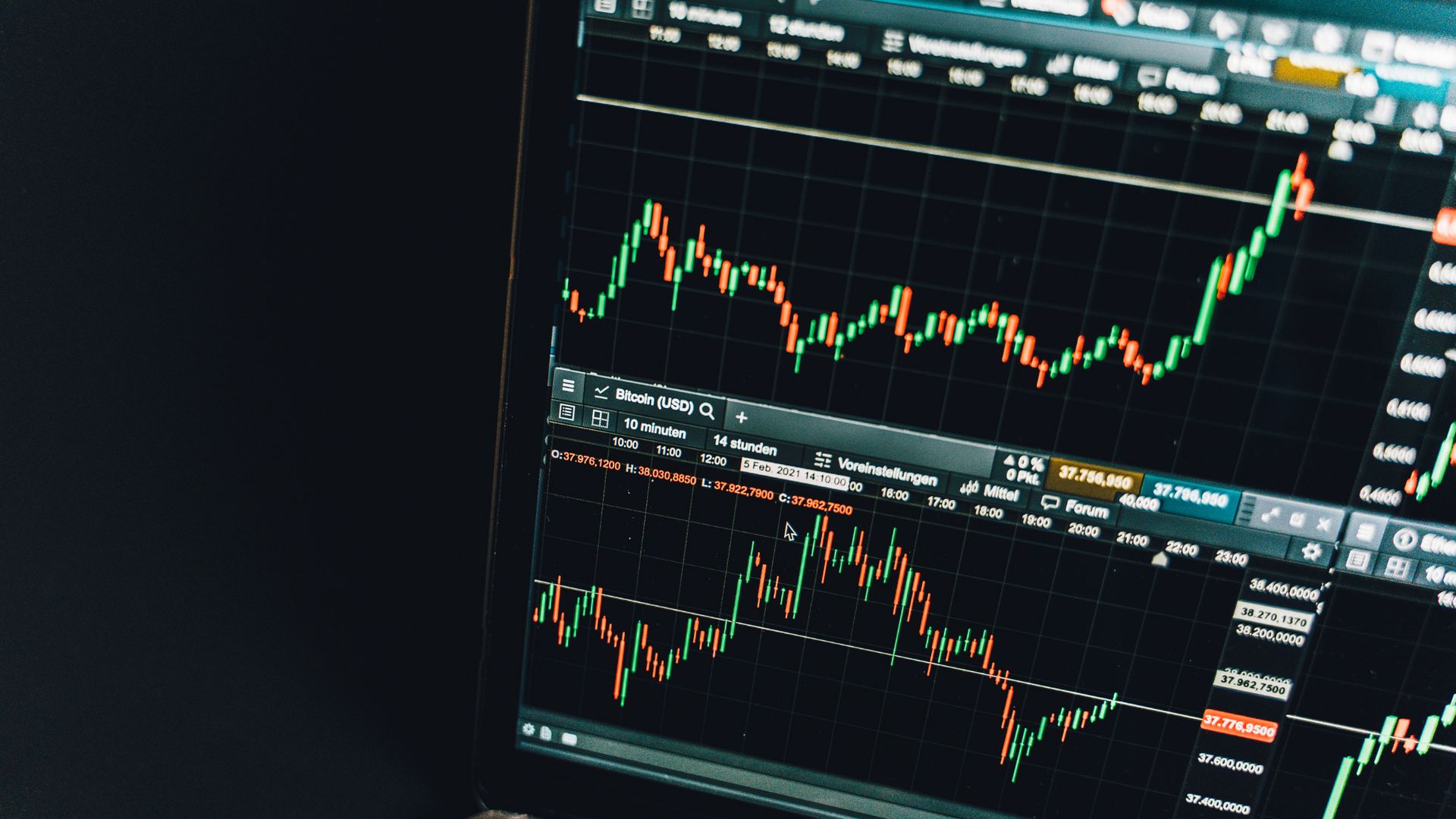
From thousands of stocks, only five stood out as having the best chance to gain +100% or more in the months ahead.
A newly released 5 Stocks Set to Double special report reveals all five tickers — free for a limited time.
While future results can’t be guaranteed, previous editions of this report delivered gains of +175%, +498%, and even +673%¹.
The newest picks could follow a similar path.
This free opportunity expires at MIDNIGHT TONIGHT.
Get the free report here
Key Indicators to Watch
ISM Manufacturing (Mon, Feb 2 – 10:00 a.m. ET) - Factory vibes check. A stronger print helps cyclicals breathe. A weaker print puts the spotlight back on defensives.
Job Openings (Tue, Feb 3 – 10:00 a.m. ET) - A clean read on whether hiring demand is cooling. Fewer openings usually supports the “rates stay on pause” story.
ISM Services (Tue, Feb 3 – 10:00 a.m. ET) - Services is where the economy actually lives. Hotter services can keep yields sticky. Softer services supports the “slowdown, not crash” crowd.
ADP Employment (Wed, Feb 4 – 8:15 a.m. ET) - A jobs pulse before Friday. A weak number can revive cut chatter. A firm number makes “higher for longer” feel less theoretical.
Initial Jobless Claims (Thu, Feb 5 – 8:30 a.m. ET) - The weekly layoff thermometer. Calm claims = steady economy. A spike = bonds get bid and risk assets get moody fast.
Everything Else
China’s January manufacturing picture looked mixed, with a private PMI improving even as the official reading cooled around the Lunar New Year.
White House economic adviser Kevin Hassett praised Kevin Warsh as a potential Fed chair pick and said he already has his dream job.
The U.S. trade balance widened sharply in November, with the trade gap up 9.4% and still higher than a year ago despite tariff efforts.
Japan’s factory activity hit a near 3.5-year high as the latest PMI showed stronger growth.
U.S. consumer confidence slumped in January to levels last seen in 2014.
That’s it for today’s edition—thanks for reading! Reply to this email with any feedback or let me know which macro trends or markets you’d like me to cover next.
Best Regards,
—Noah Zelvis
Macro Notes