- Macro Notes
- Posts
- Tariff U-Turns, A Cautious Fed, and a Condo Reality Check
Tariff U-Turns, A Cautious Fed, and a Condo Reality Check

Noah Zelvis
January 05, 2026
Welcome to 2026, where policy is doing little just kidding edits in real time.
Trump pushed back furniture and cabinet tariff hikes for a year, the Fed minutes basically hinted that more cuts might need to wait, and the data is sending mixed signals.

Hidden Growth Picks (Sponsored)

Many investors are seeing solid gains in today’s market, but solid gains often hide opportunities with far greater potential.
A new analysis highlights the 5 Stocks Set to Double, selected from thousands of companies showing early signs of powerful growth.
These picks feature strong fundamentals and technical indicators that often appear before meaningful upside.
Past editions of this research uncovered gains of +175%, +498%, and +673%.
Download the 5 Stocks Set to Double. Free Today.
*This free resource is being sent by Zacks. We identify investment resources you may choose to use in making your own decisions. Use of this resource is subject to the Zacks Terms of Service.
*Past performance is no guarantee of future results. Investing involves risk. This material does not constitute investment, legal, accounting, or tax advice. Zacks Investment Research is not a licensed dealer, broker, or investment adviser.
Stay Up to Speed on Macro News!
We now send our macro-focused news via text, so you’re never far from the latest market-moving action.
The Big Picture
Oil and Gas
When Barrels Change Hands, Power Usually Follows

A sudden political rupture in Venezuela is setting the stage for a rapid rerouting of its oil exports.
Instead of flowing east, much of that crude is now likely to move back toward the United States, reshaping trade routes without breaking global supply.
This is not a volume story. It is a destination story, and those tend to matter just as much for prices, margins, and leverage.
Why U.S. Refineries Are Watching Closely
Many U.S. Gulf Coast refineries were built for heavy crude, the exact kind Venezuela produces.
Over time, those plants have had to rely more on imports from other regions as domestic shale output skewed lighter.
A renewed flow of heavy barrels would improve efficiency, lower blending costs, and give refiners more flexibility.
That kind of operational relief can ripple into fuel markets even if headline oil prices stay calm.
China Feels the Other Side of the Shift
Any major redirection of Venezuelan oil comes primarily at China’s expense.
Discounted barrels that once flowed quietly into independent refineries would become harder to secure if exports normalize at global prices.
The Bigger Picture
This moment highlights a broader theme in global energy. Power is no longer just about how much oil exists, but who controls where it goes.
For the U.S. economy, stable supply routes, refinery optimization, and reduced reliance on geopolitical workarounds quietly strengthen energy resilience.
Even without a price spike, this kind of realignment can redraw the balance of influence across global oil markets.
Manufacturing
The Assembly Lines Are Quiet, and It’s Getting Loud
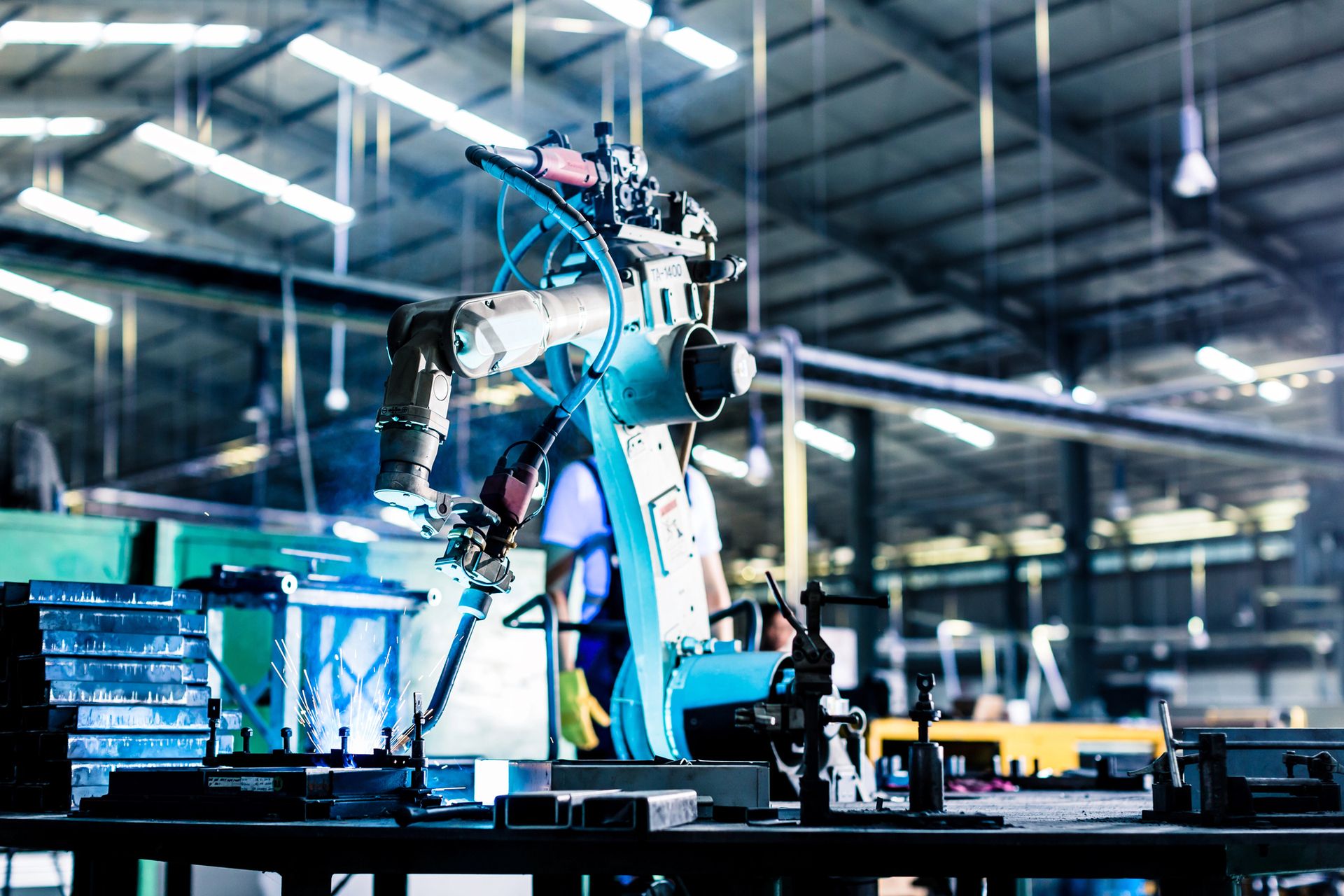
U.S. manufacturing closed out the year on a sour note, sliding to its weakest point in more than a year.
Activity kept shrinking, orders failed to bounce back, and momentum never materialized for a late rescue.
This is not a sudden stumble. It is a grind lower that has stretched across most of the year, leaving factories stuck in contraction mode.
Orders Didn’t Show Up at the Party
New orders remain the biggest problem. Demand has not collapsed, but it keeps slipping just enough to stop any recovery from taking hold.
When factories cannot count on future work, production slows, hiring freezes, and investment plans quietly get shelved. That hesitation compounds over time.
Costs Refuse to Cool
Even as demand weakens, input costs remain stubbornly high.
Materials are still expensive, margins are under pressure, and price relief is not arriving fast enough to reset confidence.
That mismatch hurts. Factories are being squeezed from both sides, selling less while paying more.
Hiring has been shrinking month after month, turning manufacturing into one of the softest corners of the labor market.
Factories Don’t Lead, but They Set the Mood
Manufacturing is no longer the engine of U.S. growth, but it still shapes how the economy feels.
When factories struggle, confidence slips, investment hesitates, and regional economies feel the drag first.
This is not a collapse, but it is a warning light.
If demand remains soft and costs remain high, the slowdown does not remain contained; it quietly spreads to the rest of the economy.
Stay Ahead (Sponsored)
Political transitions historically increase uncertainty—and this cycle is no exception.
Tariff expansion is reviving crash-risk conversations across Wall Street.
Asset protection strategies are gaining attention as volatility accelerates.
Ignoring structural risk has consequences during regime shifts.
Awareness precedes action.
No guarantees are implied.
This content is not a recommendation to buy or sell.
Download the FREE Presidential Transition Guide now.
Tax
Global Tax Rules Get a Tune Up With U.S. Reality Baked In

More than 145 countries have agreed to update the global minimum tax framework, giving fresh life to a deal that once looked fragile.
The core idea remains intact; large multinationals face a shared minimum tax floor, but the rules are now smoother, simpler, and more workable.
For markets, this is less about ideology and more about certainty. Businesses finally get clearer guardrails, rather than a patchwork of threats and workarounds.
Why This Matters for U.S. Companies
The revised framework better aligns global rules with existing U.S. tax structures, reducing the risk of double taxation for American multinationals abroad.
That removes a major source of friction that had been hanging over cross-border operations.
With carve-outs and simplifications in place, U.S. firms gain predictability when booking profits, planning investments, and allocating capital globally.
Stability Over Tax Shock
Global tax fights tend to spook investment, slow dealmaking, and push companies into defensive mode.
This update lowers the odds of sudden tax surprises by setting clearer expectations across jurisdictions.
More than 65 countries have already begun implementing the framework, and this revision helps prevent fragmentation as adoption spreads.
When Rules Stop Scaring Capital
Global tax uncertainty acts like sand in the gears of investment.
When companies cannot predict how profits will be taxed across borders, they slow expansion, delay hiring, and park capital defensively.
For the U.S. economy, fewer tax disputes mean cleaner capital flows, steadier investment decisions, and less incentive for multinational gamesmanship.
In macro terms, removing friction often matters more than adding stimulus.
Poll: Which job benefit matters most to you after salary? |
Metrics to Watch
Tariff Rollback Ripple Effects (this month):
Furniture, cabinets, and vanities just got a one-year tariff timeout.
Watch how fast retailers stop warning about price hikes and start talking promos again, plus any margin relief at home-improvement names.Fed Patience Meter (into late January):
The minutes leaned cautious, with some officials wanting to sit tight for a bit.
Translation: rate-cut expectations could swing hard on the next few prints and speeches, so keep an eye on the market’s mood shifts.The Factory Vibe Check (ongoing):
Chicago’s barometer bounced but still says contraction, while China’s PMIs crawled back into growth territory.
Watch new orders and employment components for the real story, not just the headline number.Housing Split Screen (next few weeks):
Case-Shiller is showing slow home-price growth, and condos are in the roughest stretch in over a decade thanks to higher HOA dues, insurance, and weaker demand.
Watch days on market and price cuts, especially in condo-heavy metros.Layoff Pressure, Not Hiring Hype (weekly):
Jobless claims dipped again and are still living in that familiar range.
Keep an eye on continuing claims too, since that’s where you’ll see if people are stuck unemployed longer.
Market Movers
🪑 Tariffs Blink, Retailers Exhale
The furniture and cabinets delay takes a little sting out of the inflation story.
It does not fix everything, but it gives import-heavy retailers and home refresh spending a better chance to breathe.
🏦 The Fed Goes from Cutting Mode to Tuning Mode
The minutes read like a committee that wants proof inflation is behaving before it keeps easing.
That can keep rate-sensitive trades jumpy, especially anything priced for a smooth glide path.
🌏 Asia Trade Strength Stays in the Driver’s Seat
South Korea just posted record exports for 2025 with chips doing the heavy lifting, and China’s factory gauges are back in growth.
If global demand holds up, cyclicals and shippers get a tailwind, even if the ride is bumpy.
🏙️ Condos: the Awkward Corner of Housing
Single-family is slowing, but condos are the real headache thanks to HOA and insurance sticker shock.
That pressure can spill into regional banks, insurers, and anyone counting on easy housing turnover in condo-heavy markets.
Market Impacts
Equities: Stocks limped into the year-end finish line and still managed a glow-up for 2025.
The S&P 500 closed lower again Wednesday, stretching the losing streak, but the bigger headline is the full-year gain and how quickly markets bounced back from the early-April tariff panic.
The vibe for 2026 looks like this: expect more chop, more rotation, and less free lunch from megacap momentum.
How to play it: Keep your “sleep at night” core in profitable leaders and broad sector exposure, then use dips to add instead of chasing random fireworks.
If the market goes sideways, quality and cash flow tend to win the slow race.
Bonds: Yields rose on the last day of the year, with the 10-year back around the mid-4s, even though it finished 2025 lower overall.
The labor market still looks more low-firing than layoffs-everywhere, which keeps the bond market in that annoying tug-of-war: cuts happened, but the economy is not rolling over.
How to play it: The belly of the curve still does the job for income without dramatic plot twists.
Keep some longer duration as a hedge, but do not size it like you are betting on a recession tomorrow.
Currencies: The dollar started 2026 looking a bit wobbly after a rough 2025, and the market is already staring at two things: incoming labor data and the next Fed chair decision later this spring.
The yen is hovering near weak levels, while the euro and pound are coming off big 2025 gains.
How to play it: Keep horizons short and do not overthink tiny holiday-thin moves. If the next U.S. data comes in softer, the dollar can stay under pressure.
If it comes in firm, the dollar can bounce fast.
Commodities: Oil is trying to stabilize after a brutal 2025, with geopolitics back on the menu and supply headlines popping early in the new year.
Meanwhile, gold and silver are cooling off after a monster run, helped along by profit-taking and higher margin requirements that basically tell traders to bring more cash to the casino.
How to play it: For energy, the steadier lane tends to be infrastructure and cash-flow businesses, not the most levered drillers.
For precious metals, treat them like insurance, not a personality trait.
Free Signal Guide (Sponsored)

He’s been trading full-time for more than 30 years.
And there’s one tool he trusts above all others.
It’s his #1 indicator — a clear, reliable signal that’s helped him find major opportunities long before the crowd.
It’s not complicated.
It’s not technical.
And it’s not sold anywhere.
This is the same signal that’s guided him through every bull and bear market.
Now, for the first time, he’s giving you free access to it — along with a short guide explaining how it works.
[Get your free copy now]
Key Indicators to Watch
ISM Manufacturing Index (Mon, Jan 5, 10:00 a.m. ET) - A quick gut-check on factory demand. If it improves from the recent sub-50 zone, cyclicals get a lift and yields can stay sticky. If it slips, defensives and bonds usually look better.
Auto Sales (Mon, Jan 5, time TBD) - A clean read on big-ticket consumer demand. Strong sales support consumer names and credit optimism. Weak sales can hint that high rates are finally biting.
ADP Employment (Wed, Jan 7, 8:30 a.m. ET) - A temperature check on private payroll growth before the bigger jobs headlines later in the month. A surprise rebound supports stocks and the dollar. Another soft print helps the rate-cut crowd.
Job Openings (Wed, Jan 7, 10:00 a.m. ET)
The labor market pressure gauge. Fewer openings usually means less wage heat and more easing odds. A jump can revive inflation nerves and push yields up.Initial Jobless Claims (Thu, Jan 8, 8:30 a.m. ET)
The weekly layoff pulse. Calm numbers keep the soft-landing story alive. A sudden spike tends to boost bonds and spook economically sensitive stocks.
Everything Else
Mark Zandi thinks the Fed could sneak in three quick cuts in the first half, which would be a pretty spicy start to 2026.
AAA basically said your holiday road trip got a little cheaper at the pump, even if oil still refuses to behave.
Economists are giving the delayed CPI a skeptical squint, warning the “cooling” story may be getting a little help from messy data.
Asia’s factories ended 2025 on a firmer footing as orders perked up, setting a less-grim tone heading into Q1.
U.S. jobless claims slid to a one month low, which is the labor market’s way of saying I’m not dramatic, I’m just tired.
That’s it for today’s edition—thanks for reading! Reply to this email with any feedback or let me know which macro trends or markets you’d like me to cover next.
Best Regards,
—Noah Zelvis
Macro Notes