- Macro Notes
- Posts
- Tariffs Make a Land Grab While Housing Stages a Cage Match
Tariffs Make a Land Grab While Housing Stages a Cage Match

Noah Zelvis
January 22, 2026
Markets just logged one of those weeks where prices barely moved, but your stress level did. The latest twist is tariffs getting used like a geopolitical crowbar, not a trade tool.
Meanwhile, inflation is cooling on paper while groceries keep bullying your wallet, and housing is still a zero-sum game where renters want prices down and owners want their Zestimate to keep levitating.
Translation: the headlines are loud, the data is lumpy, and the best move is staying boring on purpose.

Big Shift (Sponsored)

The world is rapidly shifting to cashless systems, with countries like China leading the way.
As the U.S. rolls out FEDNOW, it’s clear that convenience could come at a steep price—your freedom.
With digital currencies, those who control the ledger control your ability to speak, transact, and live freely.
Stay informed and safeguard your future.
Download our guide on CBDCs and protect your wealth.
CLICK HERE TO GET YOUR GUIDE NOW
Stay Up to Speed on Macro News!
We now send our macro-focused news via text, so you’re never far from the latest market-moving action.
The Big Picture
Global Capital
America’s Safest Asset Just Got Politicized
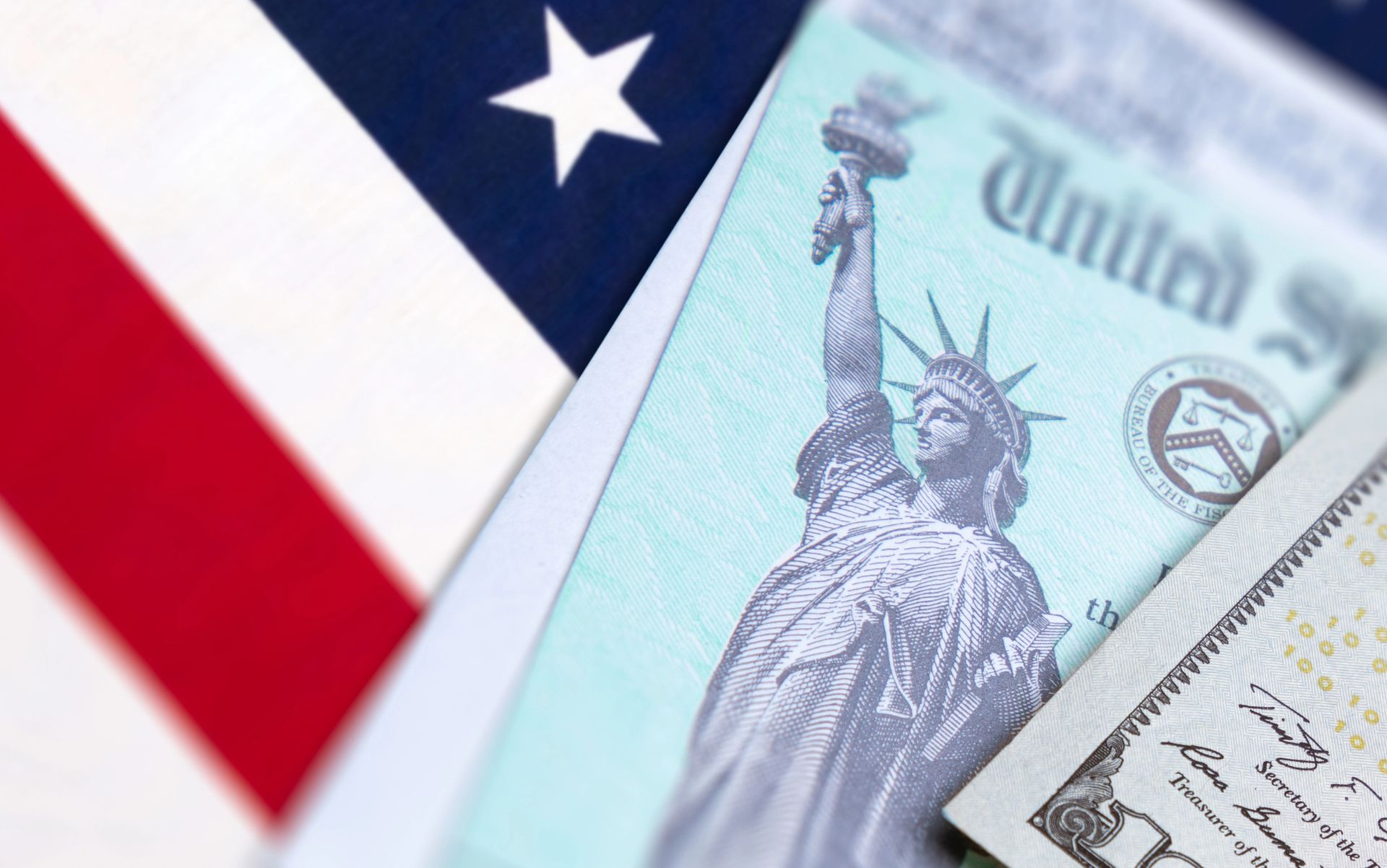
U.S. Treasurys have always been treated as neutral ground, a place where politics stop and capital parks safely.
That assumption is quietly breaking as foreign holders begin viewing U.S. debt not just as an investment, but as leverage.
Even without mass selling, the mere threat of faster portfolio shifts changes behavior. Markets price intent long before they price execution, especially when the asset involved sets the global risk-free rate.
Speed Beats Size Every Time
Foreign investors hold trillions in Treasurys, but the real risk is not the headline number. The danger lies in how quickly flows change, not how large they eventually become.
A slowdown in reinvestment, shorter duration preferences, or synchronized hedging can push yields higher within weeks.
Those moves ripple straight into mortgages, corporate borrowing, consumer credit, and federal financing costs.
Confidence Is The Real Collateral
The U.S. bond market runs on trust that demand will always show up, regardless of noise. Once that belief weakens, volatility replaces stability, even if ownership levels barely change.
Capital then looks for alternatives, not out of panic, but out of prudence. When safety itself feels conditional, the cost of money rises everywhere, and the bill lands squarely on the domestic economy.
Consumer Finance
The Quiet Rebuild Of How Americans Borrow And Pay

Across the U.S. economy, the debate has shifted from growth at any cost to cost of living, access, and transparency.
That change matters because it alters which financial models thrive.
Traditional revolving credit, layered with fees and opaque pricing, is losing its advantage just as households and small businesses become more selective about how they borrow, pay, and manage cash.
Small Businesses Are Becoming The Center Of Gravity
A second force quietly reinforcing this shift is entrepreneurship.
As new businesses form and existing ones digitize faster, demand is rising for embedded payments, instant onboarding, real-time visibility, and automated back-office tools.
Software-led finance fits that need far better than legacy systems built around branches, paperwork, and delayed settlement.
Instead of credit flowing outward from large institutions, it is increasingly being pulled inward by merchants, freelancers, and platforms that bundle financial services directly into commerce.
This Is What Slow Change Actually Looks Like
Taken together, these changes suggest a re-plumbing of the financial system. Credit access becomes more targeted.
Payments move faster. Risk is priced closer to the transaction instead of averaged across a balance sheet.
That matters beyond fintech. It affects consumer resilience, small-business formation, and the transmission of economic slowdowns through the system.
When finance becomes simpler, faster, and more embedded, economic shocks do not disappear, but they tend to break differently.
The next consumer cycle is not about spending more. It is about spending smarter, and the infrastructure underneath is finally adjusting to match.
Early Access (Sponsored)

If you own ZERO of the Next Magnificent Seven stocks.
Original Mag Seven turned $7,000 into $1.18 million.
But these seven AI stocks could do it in 6 years (not 20).
Now, the man who called Nvidia in 2005 is revealing details on all seven for FREE.
Find Out More Now Before It's Too Late.
Food Supply
The U.S. Food Engine Is Losing Its Safety Nets

U.S. agriculture is entering a more fragile phase, not because of weather shocks or weak harvests, but because the systems that once absorbed economic stress are thinning out.
Rising input costs, softer global pricing, and shrinking access to capital are converging into a pressure cycle that farmers cannot easily outrun.
This time, the strain is not isolated.
Equipment prices remain elevated, fertilizer and parts are harder to source affordably, and export competitiveness has weakened against lower-cost global producers.
When margins disappear across multiple crops at once, production does not adjust smoothly; it contracts unevenly and painfully.
Credit Is Becoming A Constraint, Not A Cushion
Rural credit markets are tightening at the worst possible moment.
As farm balance sheets weaken, lenders pull back, reducing access to operating loans that keep planting and maintenance cycles moving.
That hesitation ripples outward, slowing equipment demand, compressing rural employment, and weakening local economies tied to agriculture.
The Innovation Engine Is Slowing
The most underappreciated risk is the slowdown in agricultural research and development. U.S. farming leadership has long depended on productivity gains driven by science, technology, and scale.
As investment in innovation fades, efficiency stalls, and global competitors gain ground.
Taken together, higher costs, tighter credit, and weaker innovation create a structural drag.
If left unresolved, the impact extends far beyond farms, reshaping food prices, rural employment, and long-term economic resilience.
Poll: Which mistake costs more over a lifetime? |
Metrics to Watch
🥩 Grocery pain index: Inflation can cool and your kitchen can still feel like a hostage situation. Track the stuff that drives dinner-table rage: beef, coffee, and food-at-home.
If those keep rising, consumer mood stays sour even if the overall number behaves.🏠 Housing reality check: Watch mortgage rates, listings, and price cuts. A small drop in rates can pull buyers off the couch, but if supply stays tight, cheaper borrowing can just re-inflate prices.
The key is whether inventory actually improves, not whether politicians announce a shiny new idea.💼 Layoff signal (weekly claims): Hiring can be slow without the wheels coming off. Keep an eye on claims as the cleanest vibe check on whether the labor market is cooling or cracking.
🛒 Spending pulse: When people keep swiping, the economy stays upright. Watch consumer spending and retail momentum for clues on whether higher prices are still getting absorbed or finally getting rejected.
Market Movers
🧊 Geopolitics Meets Checkout Line
This is not the usual trade spat about jobs or deficits. Using tariffs to pressure allies over territory is a different flavor of risk, and it invites messy retaliation and longer-lasting relationship damage.
Markets hate uncertainty, and this is uncertainty with a passport.
🏚️ Housing is a Political Pressure Cooker
Every fix has a villain. Policies that help buyers often pump prices unless supply rises, and policies that push prices down make existing owners furious.
Expect lots of headline proposals, and very little that changes the math quickly.
🧾 Tariffs: Spoiler Alert, You Pay
The big myth is foreigners footing the bill. Over time, tariffs tend to show up as higher prices, lower margins, or both.
That keeps the inflation conversation alive even when the official trend looks friendlier.
🤖 AI Boom with a Caution Label
Growth forecasts are fine until the market decides the AI spend is bigger than the payoff.
If investors start questioning the profitability timeline, you can get a fast, ugly reset that spills beyond tech into the whole risk complex.
Market Impacts
Equities: The feeling out there is confused at the moment. Tuesday was the worst day in months after the Greenland-tariff threats lit the fuse and tech took the brunt.
If this turns into a real sell-America mood (stocks down and bonds down), expect more choppy tape.
How to play it: Stay married to quality (profitable tech, boring cash-flow names, health care), and treat spicy, high-multiple momentum stocks like they’re holding a lit sparkler near your curtains.
Bonds: Yields jumped hard, especially on the long end, which is the bond market’s way of saying “cool story, I’m nervous.”
When stocks drop and yields rise together, that’s usually confidence getting wobbly, not a clean growth narrative.
How to play it: If you want income without drama, the short-to-middle part of the curve still feels like the grown-up table.
Long bonds can still work as insurance, but this week is proof they can get punched around too.
Currencies: The dollar got smacked as the sell-America trade reappeared, while the euro and pound caught a lift. The safe-haven crowd also showed up in Swiss francs.
How to play it: Don’t overthink it. If headlines keep escalating, the dollar can stay choppy. If the U.S. de-escalates like it has before, you can get a quick snap-back.
Commodities: Oil popped on a real-world supply hiccup (Kazakhstan disruptions) plus better demand vibes out of China, with the weaker dollar helping.
But tariffs are still a demand-risk cloud, so crude can whipsaw fast.
Gold is doing what gold does when people get nervous: ripping to fresh records. That’s not a “get rich” signal, it’s a “people are hedging political risk” signal.
How to play it: Energy looks tradable, not marry-able. Gold still works as insurance, but keep it sized like insurance, not like a lottery ticket.
Repeat Signal (Sponsored)

Every market cycle produces a select group of companies that drastically outperform the rest.
The latest screening has pinpointed the 5 Stocks Set to Double, each showing rare traits linked to early stage momentum.
These names carry the same type of indicators that have historically appeared ahead of strong rallies.
Earlier reports featured stocks that delivered +175%, +498%, and +673%.
Get the Free 5 Stocks Set to Double Report.
*This free resource is being sent by Zacks. We identify investment resources you may choose to use in making your own decisions. Use of this resource is subject to the Zacks Terms of Service.
*Past performance is no guarantee of future results. Investing involves risk. This material does not constitute investment, legal, accounting, or tax advice. Zacks Investment Research is not a licensed dealer, broker, or investment adviser.
Key Indicators to Watch
Initial Jobless Claims (Thu, 8:30 a.m. ET) - The cleanest read on whether layoffs are creeping in. Calm claims = “cooling, not cracking.” A surprise jump = defensives and bonds get love, cyclicals get side-eyed.
GDP, First Revision Q3 (Thu, 8:30 a.m. ET) - More of a “did we already know this?” check, but markets still react if it shifts meaningfully. Stronger growth can keep yields stubborn; weaker growth supports the safety trade.
Personal Spending (Delayed, Nov.) (Thu, 10:00 a.m. ET) - This is the consumer’s report card. If spending holds up, the economy keeps its swagger. If it rolls over, you’ll see a rotation toward staples/health care and away from “good times forever” trades.
Core PCE Index (Nov.) (Thu, 10:00 a.m. ET) - The Fed’s favorite inflation temperature check. Cooler helps the “cuts later” crowd. Hotter makes rates feel stickier and can keep pressure on growth stocks.
S&P Flash U.S. Services PMI (Fri, 9:45 a.m. ET) - Services is the big chunk of the economy. A solid print says activity is still humming. A weak one says the slowdown might be spreading beyond goods and manufacturing.
Everything Else
China left its key lending rates unchanged as growth slows and policymakers try to avoid over-stimulating credit.
Europe is weighing retaliatory tariffs and its anti-coercion tool as the Greenland dispute escalates.
U.K. GDP for November came in soft, keeping the growth mood cautious into 2026.
The IMF raised its global growth view but warned tariffs and an AI-driven market correction could bite.
U.S. manufacturing output unexpectedly increased in December, a small win for industrial momentum.
That’s it for today’s edition—thanks for reading! Reply to this email with any feedback or let me know which macro trends or markets you’d like me to cover next.
Best Regards,
—Noah Zelvis
Macro Notes