- Macro Notes
- Posts
- The Fed’s Headache Just Got a Second Headache
The Fed’s Headache Just Got a Second Headache

Noah Zelvis
March 09, 2026
The jobs report surprised to the downside, oil surged, and markets immediately started gaming out what the Fed does next.
The problem is simple: weaker hiring usually argues for cuts, but higher energy costs can keep inflation noisy.

Rare Window (Sponsored)
For decades, Wall Street insiders have secured the biggest IPO gains before the public ever gets a shot.
Now, one economist says everyday investors may have a rare window to position ahead of a potential $1.5 trillion SpaceX offering.
See how this strategy works by clicking here - and what you should know before the next major IPO announcement.
The Big Picture
Consumer
Triple-Digit Oil Hits Different When Inflation Was Already the Problem
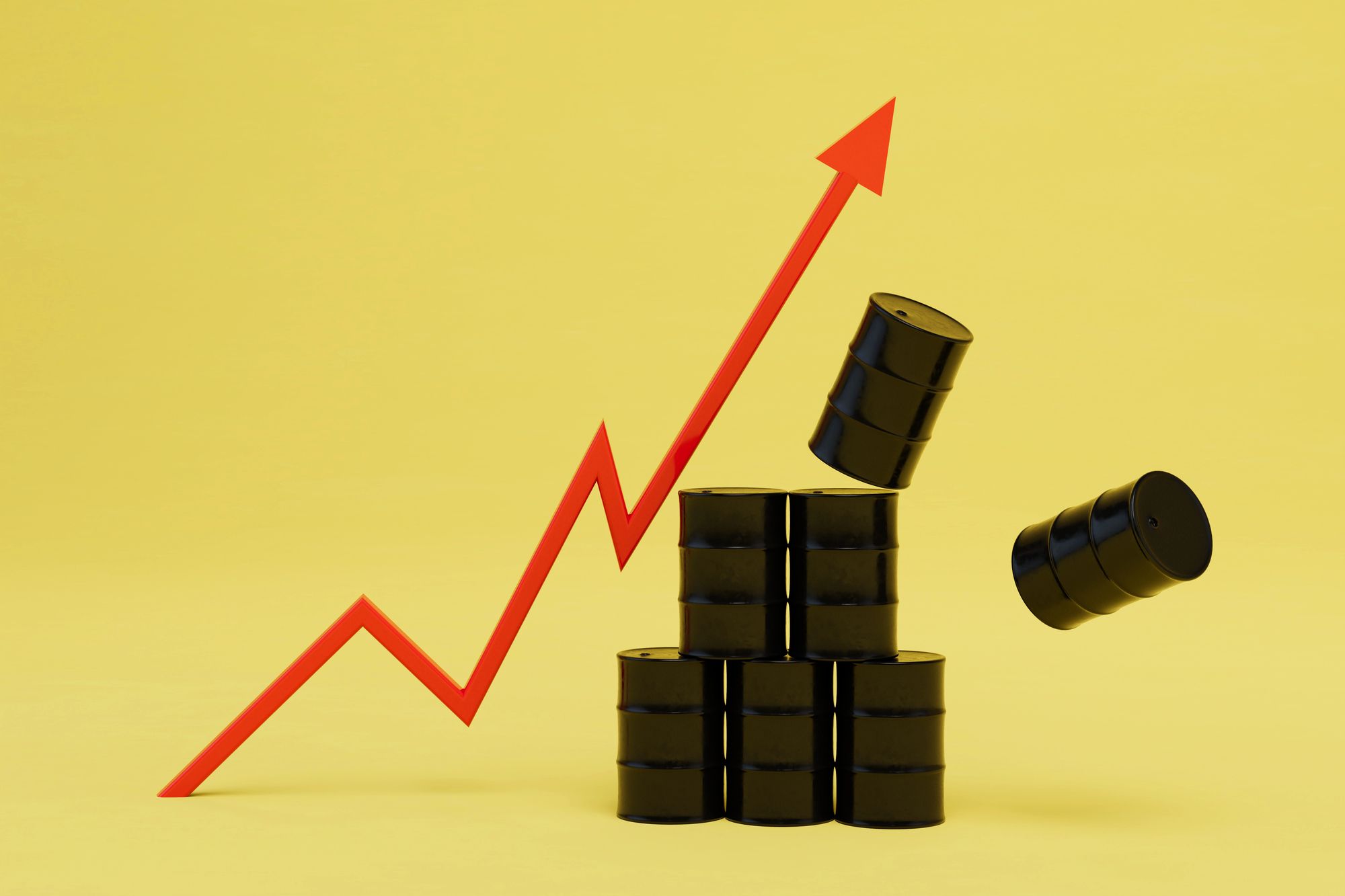
Oil prices have surged past $100 a barrel for the first time since 2022, briefly touching near $120 before settling back.
The spike is driven by severe disruption to one of the world's most critical shipping corridors, effectively choking off a significant share of global supply.
For the U.S. economy, triple-digit oil is not just an energy story. It is a cost-of-living story, an inflation story, and a consumer confidence story all rolled into one barrel.
Every Sector Feels It at Once
Gasoline, diesel, jet fuel, shipping rates, and petrochemical inputs all reprice when crude moves this fast.
Trucking companies pay more to haul goods, airlines pay more to fly passengers, and manufacturers pay more for the raw materials that keep production lines moving.
Those costs flow downstream into grocery bills, delivery fees, and retail prices within weeks.
American households, already stretched by years of elevated prices, now face another round of pressure through the most visible channel there is — the gas station sign on the corner.
The Inflation Comeback No One Wanted
The Federal Reserve has spent years trying to cool inflation, and falling energy costs were a key part of that progress.
A sustained move above $100 would reverse that tailwind and put rate-cut expectations in a difficult spot.
If oil stays elevated, the math changes for consumers, businesses, and policymakers simultaneously.
The U.S. economy can handle expensive oil for a while — but not cheaply, and not without it showing up in every data point that matters.
Regulation
The U.S. Government Wants Full Control Over AI It Pays For — and the Industry Is Splitting

New draft guidelines for government AI procurement would require companies to grant irrevocable licenses allowing their models to be used for any lawful purpose.
The rules also mandate that AI systems carry no built-in ideological bias and that companies disclose whether their models comply with any foreign regulatory frameworks.
For an industry that has largely set its own boundaries around safety and use restrictions, this is a fundamental shift.
The federal government is the largest single buyer of technology services in the country, and the terms it sets ripple across the entire market.
A Sector Forced to Pick a Lane
The tension between AI safety commitments and government access demands is creating a divide.
Companies that insist on usage safeguards risk losing access to the world's largest contract pipeline.
Those that comply fully may face reputational and commercial consequences in international markets where different standards apply.
Innovation Needs Clarity, Not Conflict
The U.S. leads the world in AI development, but that lead depends on a healthy ecosystem where startups, established players, and government agencies can collaborate productively.
Procurement rules that narrow the field to only the most permissive providers risk shrinking the talent pool and pushing safety-focused innovation offshore.
The AI economy is still being built.
The terms Washington sets now will determine whether the U.S. remains the center of gravity—or watches its best companies and researchers seek friendlier ground elsewhere.
Security Alert (Sponsored)
Executive Order 14028 was sold as a cybersecurity upgrade.
A way to protect America’s digital infrastructure.
But buried inside is something far more powerful — the ability to monitor and flag financial activity under the banner of “security.”
That means funds moving through certain institutions can be paused or restricted without warning.
Your paycheck.
Your savings.
Your transfers.
A new report explains why some investors are moving assets outside the traditional system.
See the full briefing here.
Critical Minerals
The Biggest Gap in America's Clean Energy Economy Sits Underground

The United States has significant lithium deposits, but domestic production still accounts for only a tiny fraction of what the country actually needs.
Most of the refining and battery manufacturing capacity that turns raw minerals into usable products remains concentrated overseas, primarily in China.
That mismatch creates a structural vulnerability.
The U.S. is trying to build an electric vehicle and energy storage industry while depending on foreign supply chains for the most essential input materials.
Policy Is Pushing Hard to Close the Gap
Federal programs are now channeling funding into domestic mining, processing, and battery production.
Tax incentives favor sourcing from the U.S. and allied nations, and defense legislation is tightening rules on purchasing critical minerals from non-allied foreign suppliers over a phased timeline.
The message from Washington is clear — relying on a single foreign source for strategic minerals is a risk the economy cannot continue to bear.
Demand Is Not Waiting for Supply to Catch Up
Global lithium demand is expected to more than triple by the end of the decade, driven by electric vehicles and grid-scale energy storage.
Every month of delayed domestic production means more dependence on imports and more exposure to price swings and export restrictions beyond American control.
The U.S. has the geology, the policy framework, and the demand. What it needs now is speed — because the countries already ahead in this race are not slowing down.
Trivia: What is the most valuable sports franchise in the world as of recent Forbes rankings? |
Metrics to Watch
Gas Prices (Daily, All Week)
This is the inflation signal people actually notice. If prices keep climbing, the odds rise that shoppers pull back elsewhere.Initial Jobless Claims and Continuing Claims (Thu)
Claims show whether layoffs are spreading or if employers are still trying to hang onto workers. Continuing claims matter because they hint at how hard it is to get rehired.Wages and Hours Worked (Watch Commentary Now, Confirm in Next Payroll Print)
A job loss with steady wages is one thing. A job loss plus softer pay or shorter hours is when spending starts to wobble.Tariff Refund Process Updates (All Week)
Refunds may help, but timing is everything. If cash takes months to show up, it is not a near-term boost for demand.Oil Supply and Shipping Updates (Hormuz Traffic, Insurance, Freight, Outages)
If flows normalize, the inflation scare fades. If shipping stays tangled, energy can stay high long enough to matter.
Market Movers
🧯 Stagflation Jitters, Even if Only for a Week:
A weak jobs print plus higher oil is the kind of combo that makes markets jumpy. That often shows up as bigger daily swings and faster rotations between sectors.
⛽ Consumer Pressure Builds at the Pump
Higher gasoline prices act like a tax on households. Travel, restaurants, and lower-end retail usually feel it first.
🏦 Rate-Cut Expectations Get Messier
A softer labor market increases the case for cuts, but energy-driven inflation risk can delay them. That tug of war tends to keep bond yields and equity multiples volatile.
🌏 Asia Takes the Bigger Hit if the Shock Lasts
Many Asian economies import most of their energy. A prolonged spike can weaken currencies and slow growth, which can bleed into global demand and earnings for exporters.
Market Impacts
Equities: Stocks are acting like they just got hit with a one two punch: weaker jobs and way more expensive oil.
Energy and defense can look like the winners on days like this, but the bigger story is what $90-plus oil does to everyone else’s margins.
If crude stays hot, expect more pain in travel, industrials, and anything tied to shipping or big fuel bills.
Keep your core in quality and cash-flow names, and treat bounce days in the most oil-sensitive stocks as a chance to trim, not chase.
Bonds: Treasury yields dipped on the ugly jobs print, but the move got capped by inflation anxiety from oil.
Translation: bonds want to rally on growth fears, but energy is trying to ruin the party.
The safer play is still the front to middle part of the curve for income without drama, while long bonds are more of a hedge that can whip around if the oil story changes overnight.
Currencies: The dollar is back in its safe-haven era. When war risk rises and oil spikes, investors tend to hide in the dollar, especially when rate-cut bets get pushed out.
The euro and yen usually feel it more because higher energy costs hit their economies harder.
If the conflict drags on, expect more dollar strength and more pressure on energy-importing currencies.
Commodities: Oil is the headline and it is moving like one. A major choke point getting clogged can turn into a real supply story fast, which is why crude is ripping and gasoline is already creeping higher.
Gold is caught in a tug of war: it likes chaos, but it hates a strong dollar.
If oil stays elevated, inflation chatter comes back, and that keeps both gold and volatility in the conversation.
Under The Radar (Sponsored)
While many stocks stall, a small group is quietly strengthening.
Five companies just earned spots in a new high-upside report — each showing rare alignment between fundamentals and momentum.
Previous editions produced triple-digit winners¹.
Free access ends tonight.
See all 5 here
*Results may not represent all stock picks and may reflect partially closed positions. Investing involves risk, and past performance does not guarantee future results. This is not financial advice.
Key Indicators to Watch
NFIB Optimism Index (Tue, Mar. 10, 6:00 a.m. ET) - A quick pulse on small-business mood. If optimism slips, hiring and capex usually follow.
Existing Home Sales (Tue, Mar. 10, 10:00 a.m. ET) - Housing is a confidence trade. Stronger sales suggest consumers are still willing to make big moves even with uncertainty.
Consumer Price Index, February (Wed, Mar. 11, 8:30 a.m. ET) - This is the big one with oil this hot. Markets will watch whether energy is starting to leak into broader prices.
Initial Jobless Claims (Thu, Mar. 12, 8:30 a.m. ET) - The cleanest weekly read on layoffs. A steady number says employers are cautious but not panicking.
U.S. Trade Deficit, January (Thu, Mar. 12, 8:30 a.m. ET) - With tariffs and oil both in the mix, trade numbers can get weird. A wider deficit can also keep political noise elevated.
Everything Else
⛽ War headlines are already creeping into gas prices and even shaking mortgage markets as traders game out how long this drags on.
🏦 The UAE is weighing a move to freeze assets tied to Iran as the conflict keeps escalating.
🧊 Hiring is still stuck in slow motion, with ADP payrolls showing modest adds and a not-so-great January revision.
📉 Rate-cut odds perked up after weak jobs data, as traders start imagining the Fed getting a little more flexible.
🚢 Imported inflation got a bump from capital goods, a reminder that cost pressure can still sneak in through the back door.
That’s it for today’s edition—thanks for reading! Reply to this email with any feedback or let me know which macro trends or markets you’d like me to cover next.
Best Regards,
—Noah Zelvis
Macro Notes