- Macro Notes
- Posts
- Trade Me Maybe: Why This Market Keeps Flirting With Slower Growth
Trade Me Maybe: Why This Market Keeps Flirting With Slower Growth
Trade is losing steam, oil is still a problem, and the world economy is starting to feel less invincible.

Noah Zelvis
March 23, 2026
The global economy is starting to look a little less superhero, a little more sleep-deprived intern.
Trade is still moving, but not with the same swagger, and higher energy costs are making life harder for import-heavy economies that were already juggling enough.
AI spending is still doing some heavy lifting, but if the Middle East conflict drags on, the world may be in for a slower, bumpier ride than investors were hoping for.

Insider Alert (Sponsored)

The Trump Administration is Loading Up on Stocks.
15% Stake in MP Materials... Up 216% in 4 Months.
10% Stake in Lithium Americas... A triple in 3 weeks.
10% Stake in Trilogy Metals... Up 388% in 8 days!
The Big Picture
Investment
Wall Street's Sharpest Traders Just Voted With Their Wallets, and It Was Not for the U.S.
The most sophisticated investors in global markets spent last week doing something that would have been hard to imagine a year ago.
They sold U.S. stocks aggressively, added bets that American shares would fall further, and redirected capital toward Europe.
It was the largest wave of net selling since spring 2025, and it marked the fifth consecutive week of bearish positioning against U.S. equities. This is not retail panic.
This is institutional capital making a calculated judgment that the near-term risk in American markets outweighs the reward.
What the Bets Tell You About the Economy
The sectors being dumped hardest tell the story.
Consumer discretionary, technology, and financials led the sell-off, all areas that depend on confident spending, stable borrowing costs, and growth momentum.
The only sectors attracting fresh money were consumer staples and energy, the classic hiding spots when investors expect turbulence ahead.
When capital rotates from growth sectors into defensive ones, it signals that the people closest to the numbers see slower consumer activity, stickier inflation, and an economy under more pressure than headlines suggest.
Europe Becomes the Alternative
For years, U.S. markets were the default destination for global investment.
That dominance is being questioned in real time as rising oil costs, policy uncertainty, and softening growth push capital toward markets that look relatively more stable.
Europe is not booming, but it is offering something the U.S. is struggling to deliver right now: predictability.
Inflation
From the Gas Pump to the Grocery Shelf, Costs Are Climbing Again
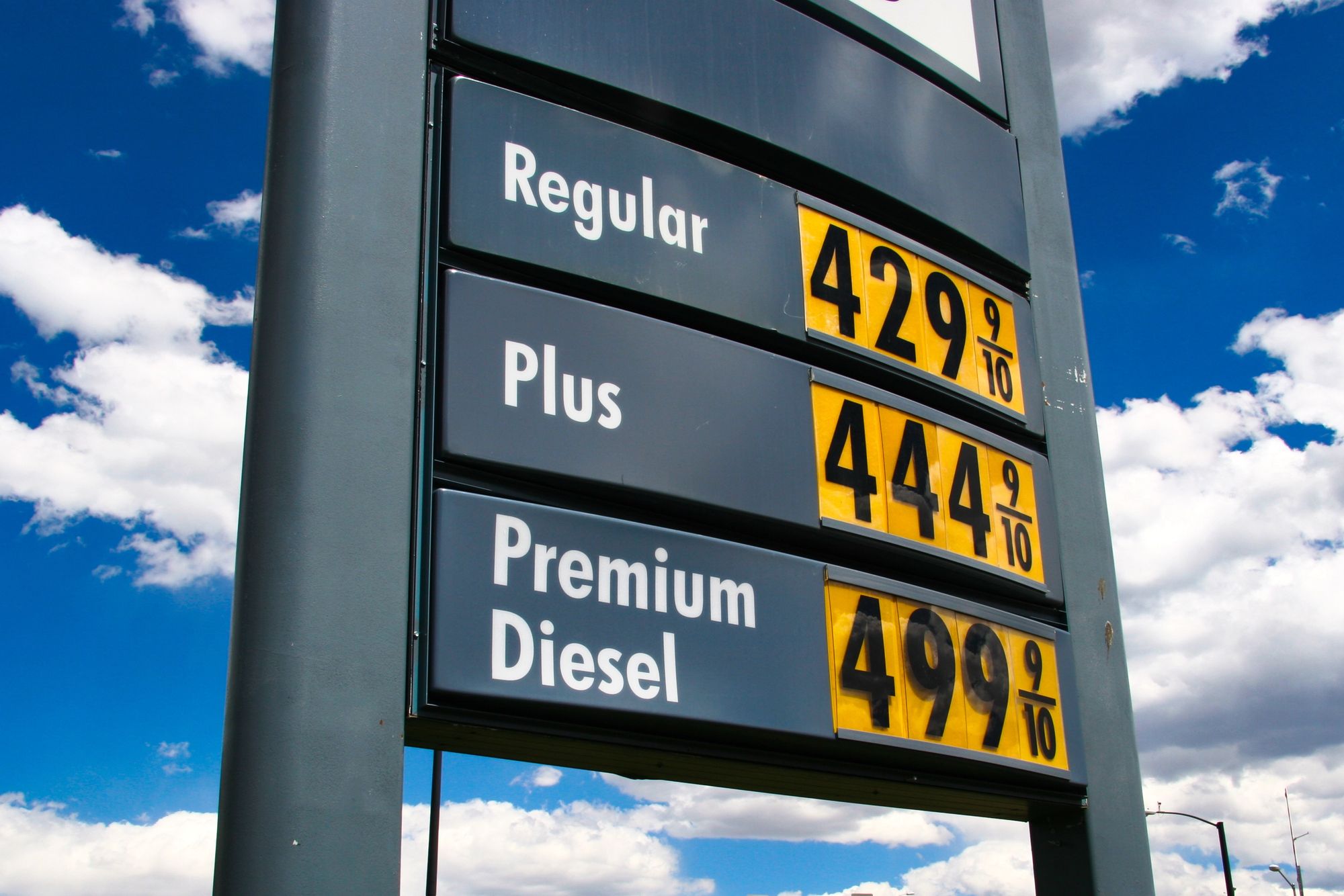
Diesel fuel has crossed $5 a gallon for the first time since late 2022, and that number matters far more than gasoline for the broader economy.
Diesel powers the trucks that haul food to supermarkets, the ships that move goods between ports, and the machinery that keeps warehouses and construction sites running.
When diesel rises, everything that moves gets more expensive. The cost does not stay in the supply chain.
It lands on grocery shelves, in delivery surcharges, and across household budgets that were already stretched thin after years of cumulative inflation.
Fertilizer Adds a Second Layer
Nearly half the world's urea supply, the most widely used fertilizer, ships through a corridor that is now effectively closed.
Prices have surged roughly 40% in a matter of weeks, and any prolonged disruption threatens the cost of growing food at the most basic level.
American farmers heading into the planting season face higher input costs that will eventually flow into crop prices, livestock feed, and the processed food products that stock every grocery store aisle.
The pressure builds from the soil up.
Wholesale Prices Already Flashing Warning Signs
The Fed is watching an economy where inflation is reaccelerating through energy and food channels while growth softens underneath.
For American households, the math is painfully simple. Paychecks are not growing fast enough to keep up with a grocery bill that keeps climbing.
Fund Under $20 (Sponsored)

In a bombshell interview, Elon Musk declared that AI and robotics are "the only thing" that can solve America's $38 trillion debt crisis.
He predicts it will happen within three years. One Wall Street veteran has identified
a single fund at the center of this AI buildout - and you can get in for less than $20.
See what Musk didn't tell you
Consumer Spending
America Spends More on Pet Medicine Than Most Countries Spend on People

Americans are spending more on their animals than ever before, and veterinary care has evolved from basic checkups into a full-blown medical industry.
The market for customized pet medications alone is expected to grow steadily over the coming years, driven by demand for tailored dosages, specialized treatments, and compounded formulations that mirror the kind of personalized care humans receive.
Chronic Conditions Drive Recurring Costs
Just like their owners, American pets are living longer and developing more chronic health conditions along the way.
Neurological issues, behavioral disorders, and infections now require ongoing treatment plans rather than one-time fixes.
That shift turns pet healthcare from an occasional expense into a recurring household budget line.
For millions of families, the monthly cost of managing a pet's health now rivals what they spend on their own prescriptions.
That spending flows into pharmacies, veterinary clinics, and a growing network of specialized compounding providers across the country.
A Consumer Trend With Real Economic Weight
The pet economy is not a niche anymore. It intersects with pharmaceuticals, retail, insurance, and healthcare services in ways that generate measurable economic activity.
When households consistently prioritize pet health spending even during periods of inflation and budget pressure, it tells you something about where American consumer values are headed.
Discretionary spending usually softens when times get tight.
Pet healthcare is proving to be the exception, behaving more like a necessity than a luxury in household budgets nationwide.
Poll: Which would create the fastest panic? |
Metrics to Watch
Global Trade Pulse
The big question now is whether this slowdown stays mild or starts to spread. If goods trade keeps cooling while shipping costs stay hot, it is another sign that the world economy is losing some momentum.Energy Stress Test
Oil and liquefied natural gas are still the market’s favorite chaos ingredients. If prices stay elevated, businesses will have a harder time protecting margins and consumers will start noticing it in more places than just the gas pump.AI Demand Durability
One reason trade held up better than expected last year was the boom in chips, semiconductors, and data gear. If that spending stays strong, it could help cushion the blow from weaker demand elsewhere.Services Slowdown Risk
Transport and tourism have been growing faster than goods trade, so a longer conflict could start to leave a mark here too. Watch for softer travel demand, rerouted freight, and a general rise in doing-business-the-hard-way costs.Importer Pain vs Exporter Gain
Europe and much of Asia have more to lose if energy stays expensive, while exporters like the U.S. may hold up better. That split matters because it can reshape where investors want to hide and where they still see upside.
Market Movers
🌍 Global Trade is Losing a Gear
The WTO is basically saying the world economy can handle some turbulence, but not endless turbulence.
If the conflict sticks around, expect more caution around industrials, transport names, and anything that depends on smooth global flows.
⚡ Energy Importers are In the Hot Seat
Europe and Asia look more exposed here, and that means more pressure on growth, currencies, and central banks.
Markets may keep favoring countries and sectors that benefit from higher energy prices over the ones that have to swallow them.
🤖 AI is Still the Surprise Bodyguard
The global trade story has not rolled over completely because AI buildout keeps soaking up chips, semis, and transmission equipment.
That gives tech hardware and infrastructure plays a better cushion than the average cyclical stock.
🧳 Services May Be Next in Line
If this drags on, it is not just tankers and factories that feel it.
Travel, tourism, and shipping services could all take a hit, which means the pain may spread from commodity headlines into more everyday parts of the economy.
Market Impacts
Equities: Stocks look like they want to bounce, but oil keeps barging into the room and ruining the mood.
Futures are mostly flat to a touch lower after four straight weekly declines, and the big issue is still whether this Iran fight drags on long enough to squeeze profits and consumer spending.
For now, keep leaning toward businesses with steadier cash flow and less direct exposure to fuel, freight, and global supply drama.
If the market gets another wobble, boring may keep winning.
Bonds: Treasury yields have pushed higher as investors worry the Fed may stay parked longer than they hoped.
Higher oil prices are making the bond market act less like a safety blanket and more like a stress ball.
That keeps the short end jumpy and makes long bonds harder to trust unless growth really starts cracking.
The cleaner lane still looks like keeping duration modest and avoiding the urge to get too heroic too early.
Currencies: The dollar story is getting more complicated. It still has some safe haven appeal, but other central banks are sounding tougher too, so the greenback is not having the field to itself.
That means currency moves may stay messy rather than one way. Keep expectations flexible here.
Energy-heavy economies remain vulnerable, while exporters and commodity-linked currencies can still catch a bid when oil flares up.
Commodities: Oil is still the headline hog.
Prices are holding near elevated levels because the market is stuck between two stories: threats to energy infrastructure on one side and extra barrels coming back into the market on the other.
That keeps the setup friendly for refiners, energy logistics, and producers that can actually move product. Gold, meanwhile, just got humbled after a monster run.
It can still work as insurance, but lately it has been acting more like a crowded trade than a superhero cape.
High Potential (Sponsored)
While many stocks stall, a small group is quietly strengthening.
Five companies just earned spots in a new high-upside report — each showing rare alignment between fundamentals and momentum.
Previous editions produced triple-digit winners¹.
Free access ends tonight.
See all 5 here
*Results may not represent all stock picks and may reflect partially closed positions. Investing involves risk, and past performance does not guarantee future results. This is not financial advice.
Key Indicators to Watch
S&P Flash U.S. Services PMI (Tue, 9:45 a.m. ET) - This is one of the best quick reads on whether the economy is still standing up or starting to wobble.
If services stay decent, the market can keep telling itself the consumer is hanging in there. A softer reading would add to the slow growth chatter fast.S&P Flash U.S. Manufacturing PMI (Tue, 9:45 a.m. ET) - A nice check on whether factories are managing through the tariff and energy mess or just grinding their teeth.
Stronger activity would help calm some recession nerves. A miss would feed the idea that higher costs are finally biting.Import Price Index (Wed, 8:30 a.m. ET) - This one matters more than usual because it catches some of the cost pressure coming in from abroad.
If import prices run hot, it is another reminder that inflation is not done being annoying.Initial Jobless Claims (Thu, 8:30 a.m. ET) - Still the simplest reality check on the labor market. A stable number helps the soft landing crowd keep talking.
A jump higher would make investors rethink how long the Fed can stay patient.Construction Spending (Mon, 10:00 a.m. ET) - Not the flashiest report, but it helps show whether projects are still moving or if higher rates and uncertainty are making everyone hit pause.
It also gives a useful read on how much momentum is left in real economy spending.
Everything Else
💸 Traders are starting to act like those long-promised Fed cuts may not be showing up anytime soon in this rate-cut rethink.
🏷️ A hotter producer price report reminded everyone that inflation still knows how to overstay its welcome.
⛽ Rising fuel costs are turning life into more of a grind for gig workers who cannot exactly expense the pump.
🏦 Europe’s rate outlook just got spicier, with ECB hike bets creeping back into the conversation.
📦 Taiwan’s export orders missed forecasts, which is not the kind of surprise global trade needed right now.
That’s it for today’s edition—thanks for reading! Reply to this email with any feedback or let me know which macro trends or markets you’d like me to cover next.
Best Regards,
—Noah Zelvis
Macro Notes